CASTLE CEMENT
Clitheroe Works — the freight that kept the line alive
Ribble Valley Cement
The burning of lime around Clitheroe goes back many centuries and the arrival of the railway to the town and the opening of the branch line to the Horrocksford Lime Company — site of the present Castle Cement works — in 1850 improved transportation and production increased. With closure of the station goods yards along the line during the 1960s, cement from the works became the only traffic to originate from the line. In the railway's darkest days, around the mid-1980s, as closure was proposed, the tracks would have been lifted with just a single branch line serving the works from Blackburn. This was not to be, and while the owners of Castle Cement have changed over the years the present owners Heidelberg now oversee a very pro-rail scenario with up to 12 trains coming and going each week.
Cemetery Hill — Early 1963
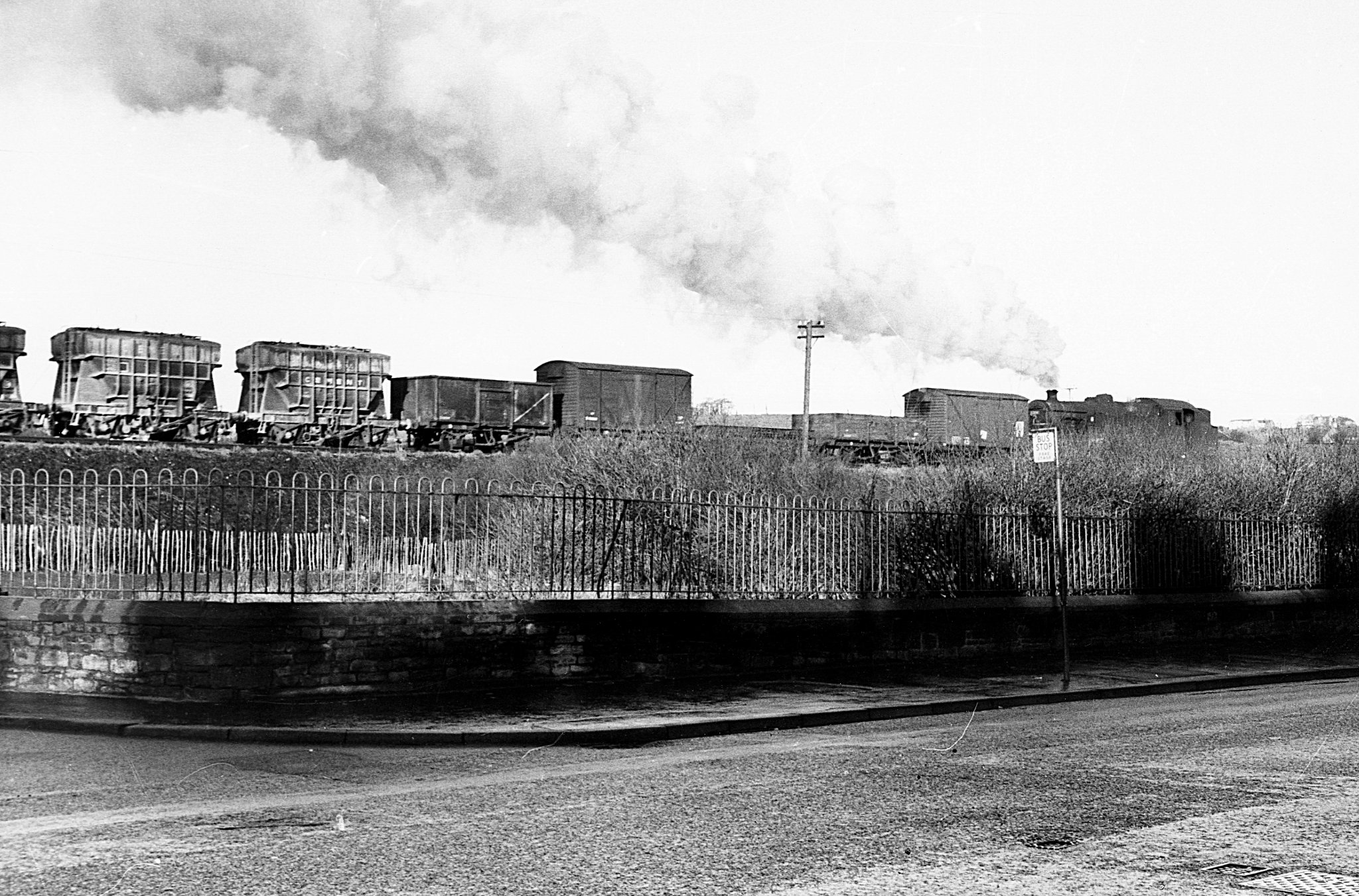
A 2-6-4T loco runs up Cemetery Hill with the morning pick-up goods including a couple of presflo cement wagons for Clitheroe — early 1963
Wilpshire
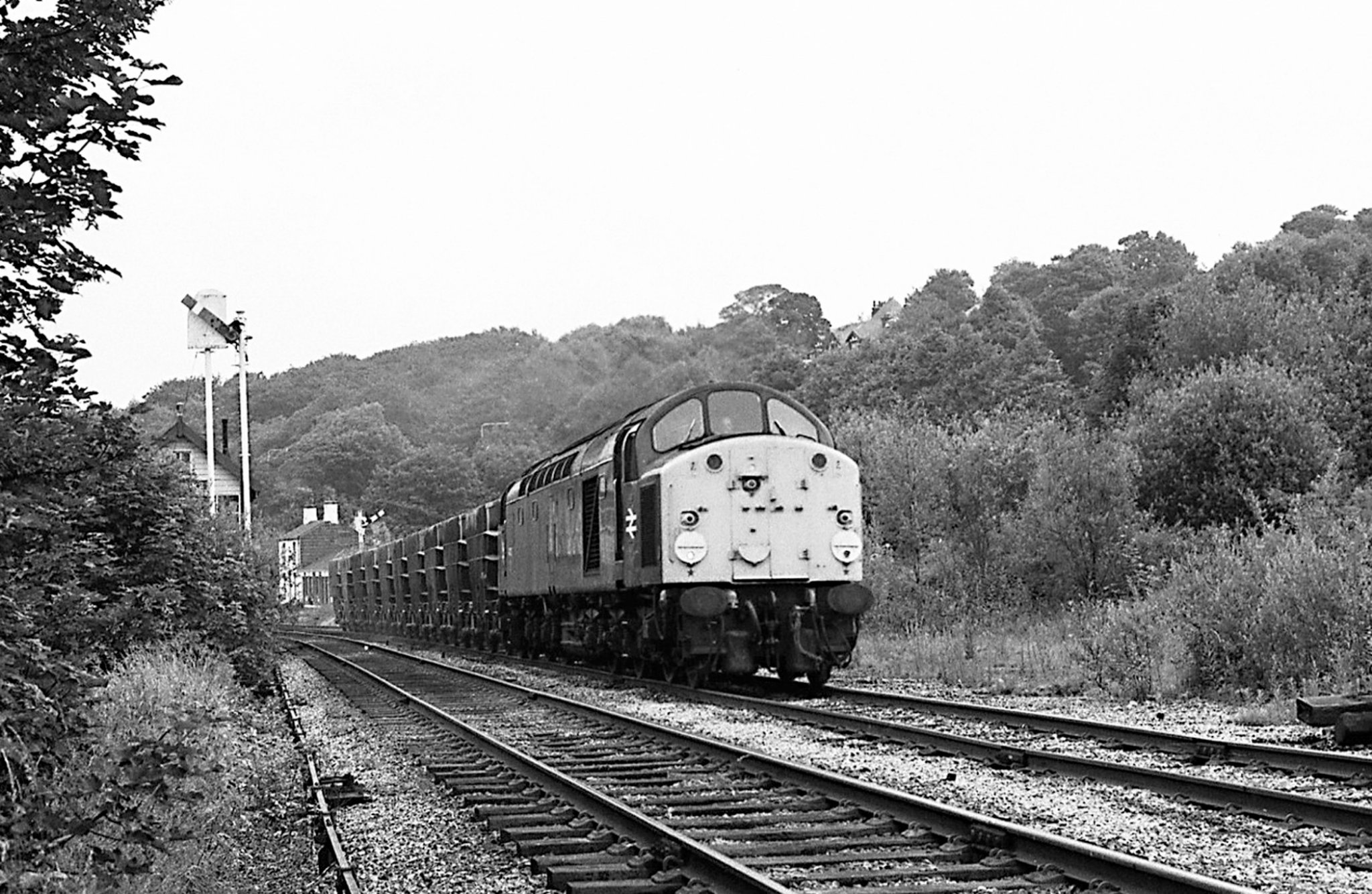
The signal box hides in the trees as No. 40112 passes through the old station at Wilpshire with a cement working from Horrocksford to Blackburn Yard. To the right is the site of the former goods yard.
Horrocksford Junction
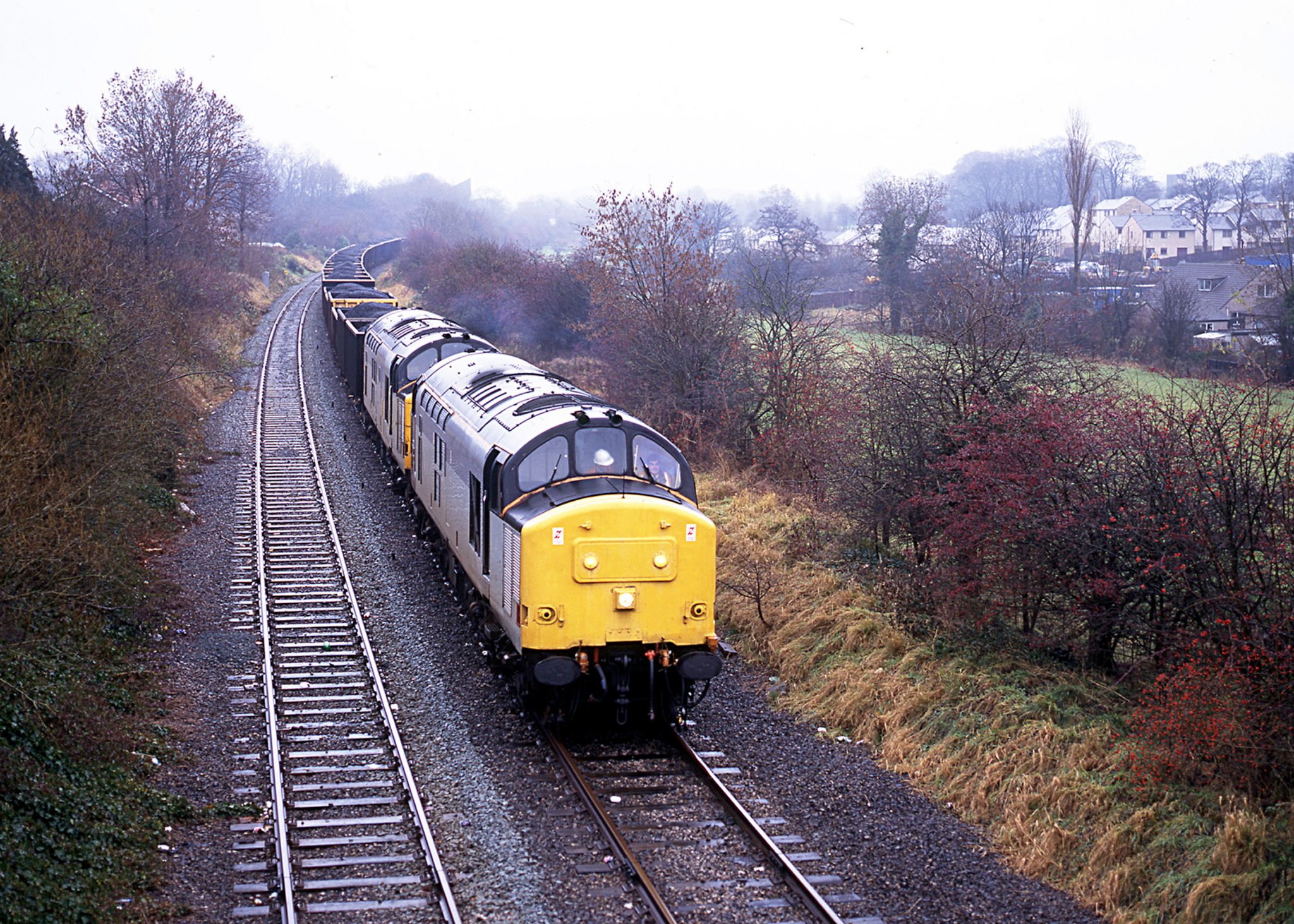
The first freight to Castle Cement in four years. Class 37s Nos. 37888 & 37686 head a 1,649 ton coal train from Carlisle Yard · 3 December 1996
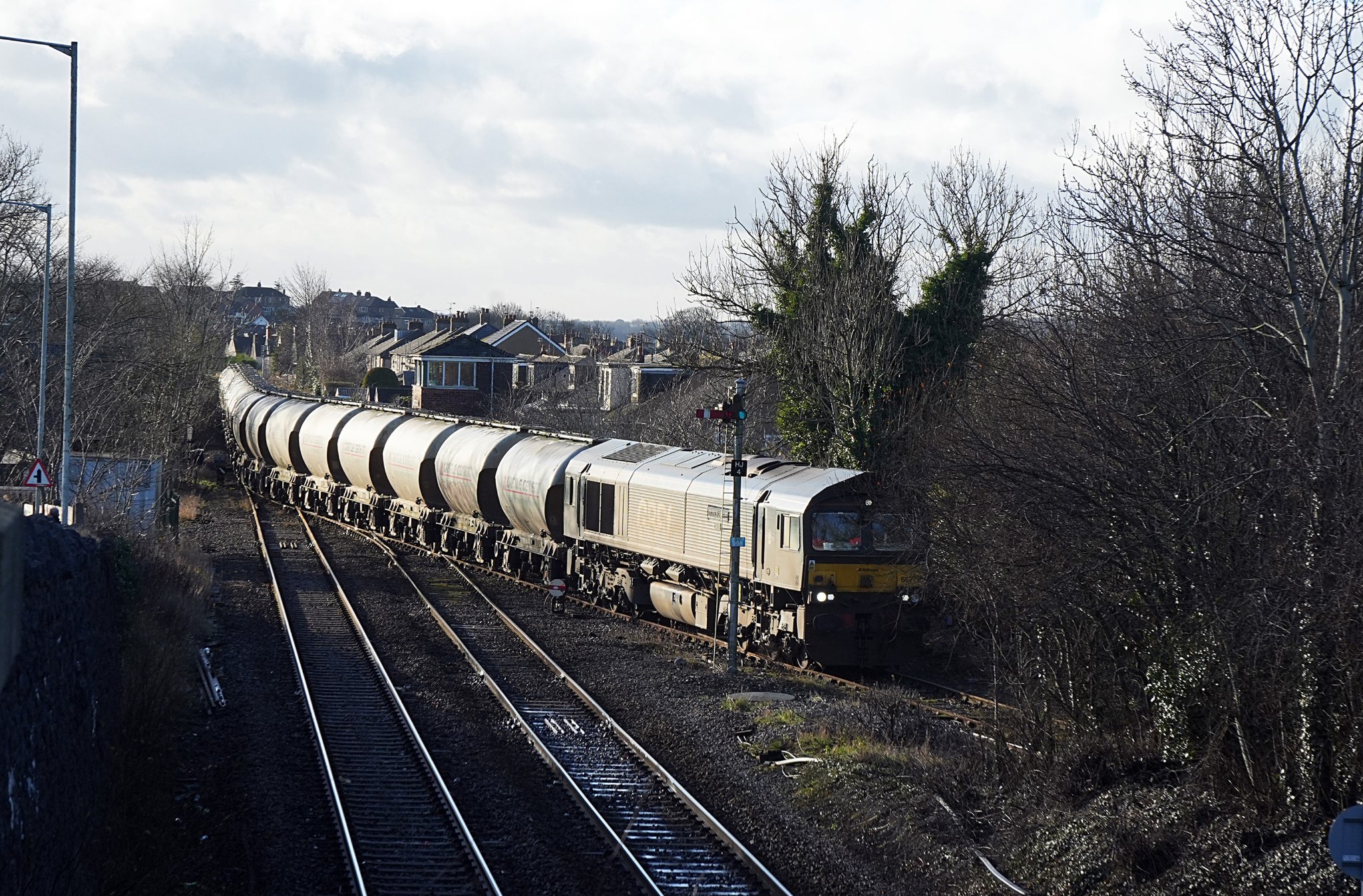
Celebrity GBRf No. 66779 'Evening Star' runs on to the Castle Cement branch with empty tankers from Avonmouth · Horrocksford Jn · 19 December 2014